Copa Holdings Q3 Profit Beats on Strong Demand
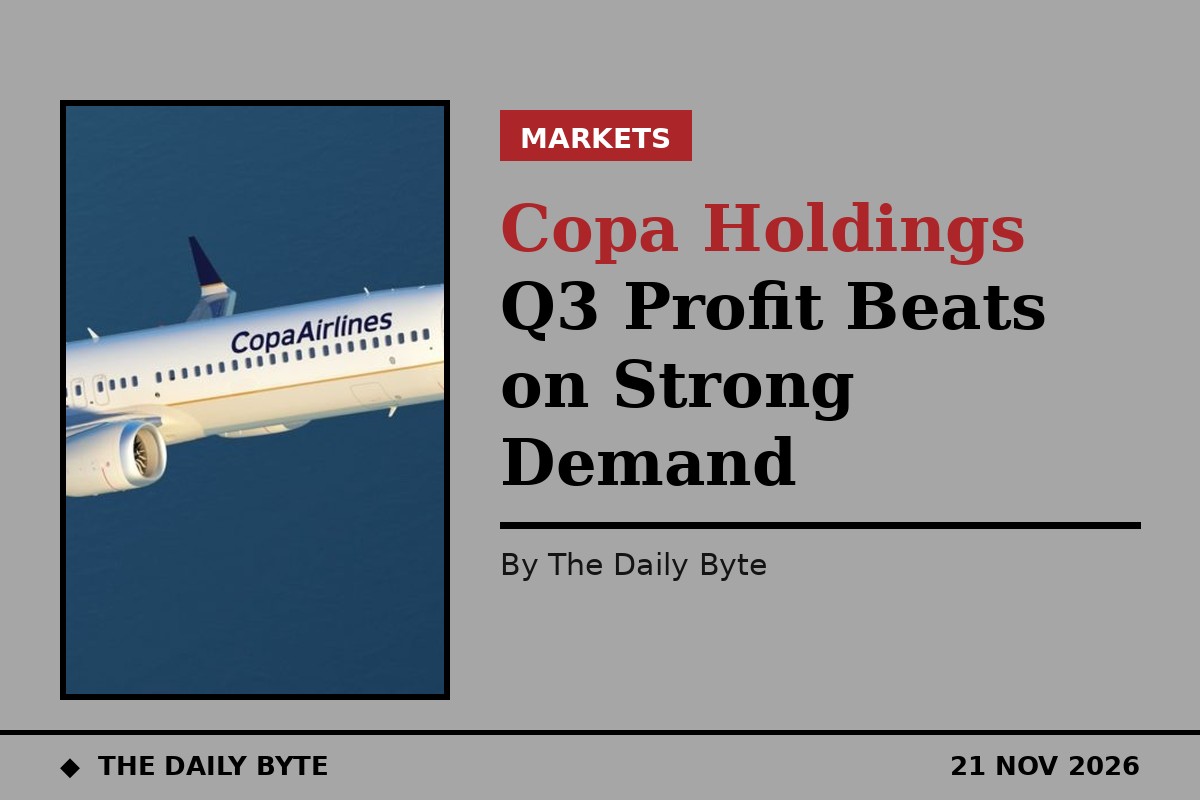
Copa Holdings reported a third-quarter net profit of 175.8 million dollars, or 4.29 dollars per share, beating analysts' forecasts as strong passenger demand and higher fares more than offset a sharp rise in fuel costs.
The Panama-based airline group announced the results on 18 November 2026. Earnings per share rose 2.2 percent on a year earlier, beating the Zacks consensus estimate of 4 dollars per share. Shares in the company gained 5.5 percent after the results were published.
Operating revenue surged 31.9 percent year on year to 1.2 billion dollars, topping the consensus forecast of 1.18 billion dollars. Operating profit increased 5.7 percent to 224.4 million dollars, reflecting the recovery of a significant part of the higher fuel bill through revenue gains.
Fuel costs squeeze margins
The headline growth came with a clear pressure point. Fuel expenses soared 83.6 percent, and that pushed the operating margin down 4.6 percentage points to 18.6 percent. Net margin fell 4.4 percentage points to 14.6 percent, even though net profit itself rose 1.4 percent to 175.75 million dollars.
Copa said the results reflected the resilience of its business model and disciplined execution in a significantly higher jet fuel price environment. The group is built around its Panama hub and a structurally low unit cost base, which has helped it protect profitability while fuel prices climb.
Capacity is still growing. The company expects full-year 2026 operating margin of between 16 and 17 percent, with capacity growth of approximately 14.5 percent for the year.
Dividend declared as earthquake hits fourth quarter
On 18 November, the board approved a fourth dividend of 1.71 dollars per share, payable on 15 December 2026 to shareholders of record on 30 November 2026.
The fourth quarter will carry a one-off cost from an earthquake in Panama. The tremor caused about 295 flight cancellations between 9 and 10 October, which Copa said would reduce fourth-quarter operating profit by an estimated 12 million to 14 million dollars.
That disruption aside, the third-quarter numbers show an airline managing to grow revenue faster than its costs are rising in most areas, with passenger demand and pricing doing the heavy lifting. The question for the final quarter is whether fares can keep pace with fuel prices while the network recovers from the earthquake disruption.
For a carrier operating from a single hub in a region where fuel is a large share of operating costs, the balance between pricing power and cost control remains the central test. On the third quarter's evidence, Copa passed it, even as its margins narrowed.