ECB to weigh doubling bank reserves to 2%
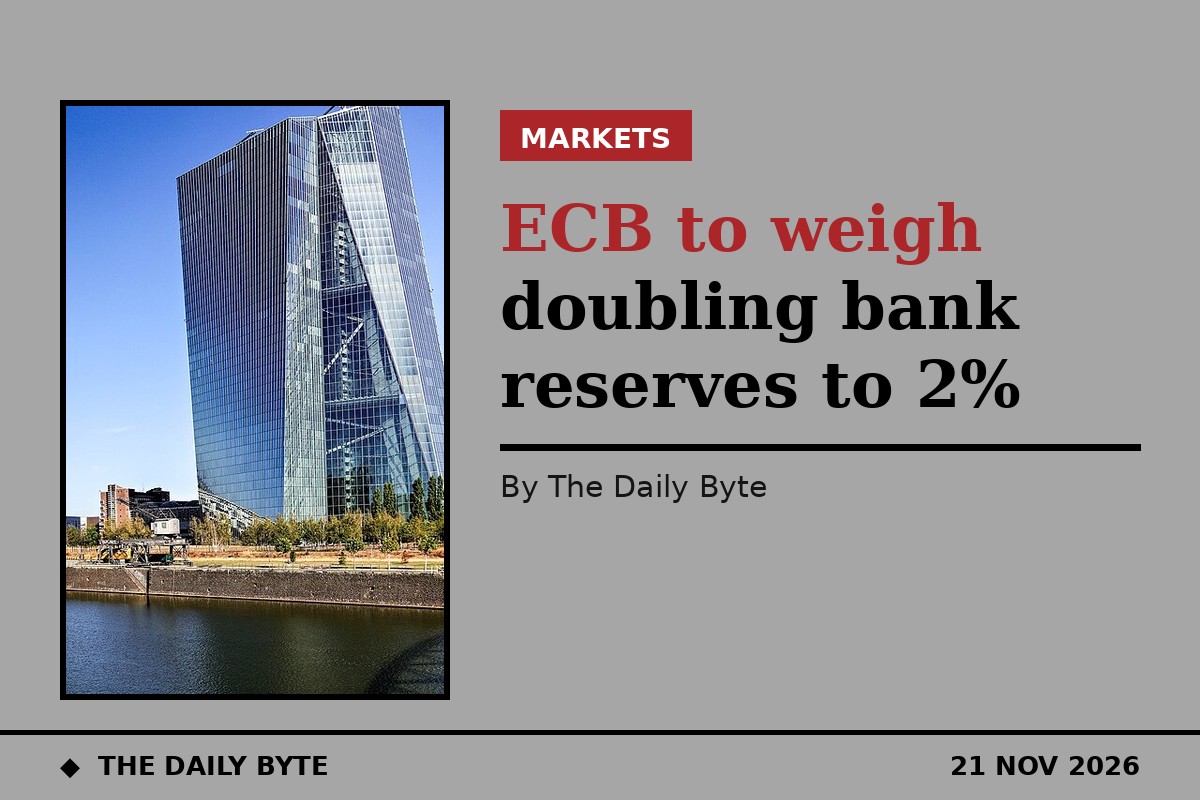
The European Central Bank is preparing to discuss doubling the minimum reserves that eurozone banks must hold at the central bank, in a move that would cut the cost of its past bond buying and pull liquidity out of the financial system.
Reuters reported on Wednesday that policymakers will debate raising the requirement to 2 per cent, from 1 per cent, at a Governing Council meeting on 25 November, citing four sources familiar with the discussions. A decision could be pushed back to the policy meeting on 17 December, the sources said.
Under the plan, commercial lenders would have to keep a larger share of their deposits and other short-term liabilities in an account at the central bank that pays no interest. A bank with 100 billion euros of eligible liabilities would see the cash it must set aside rise from about 1 billion euros to about 2 billion euros.
Why the ECB wants the change
The main effect would be to cut losses at the central banks of the eurozone, such as Germany's Bundesbank, which built up large holdings of bonds at low or negative yields under the ECB's stimulus programmes in past years and now face rising interest costs on bank deposits.
Reuters calculates that raising the requirement to 2 per cent would save the ECB and the 21 national central banks that share the euro around 4.4 billion euros, about 4.8 billion dollars, a year at current interest rate levels. The saving could grow further, because the ECB's deposit rate is currently 2.5 per cent and is expected to reach between 3 per cent and 3.25 per cent next year.
Banks currently earn no interest on their minimum reserves. The ECB set the remuneration rate on required reserves at zero in September 2023, while other funds that banks hold at the central bank earn the deposit rate. Raising the requirement would therefore shift more bank cash into accounts that pay nothing.
Liquidity would fall by 175 billion euros, ING says
Analysis by ING, published on Thursday, put the liquidity effect in stark terms. Doubling the minimum reserve requirement would cut excess liquidity by 175 billion euros, ING said, and bring pressure on money markets closer.
Overall excess reserves stand at about 2.1 trillion euros, according to ING, and are already moving into a range where the ECB had previously estimated they would no longer be considered abundant. Taking another 175 billion euros out of that pool would leave banks with less spare cash to lend to each other overnight, which is why short-term funding costs are the part of the market most likely to feel the change first.
That trade-off sits at the heart of the debate. The move would ease the ECB's own interest bill, but it would also tighten the very liquidity that banks rely on to fund themselves day to day.
Most governors now back the move
The idea was first raised last summer but met resistance from some influential policymakers, including ECB board member Isabel Schnabel. Reuters reported that the majority of governors are now keen on the change, which is also supported by ECB vice-president Boris Vujcic and chief economist Philip Lane, giving the debate fresh momentum.
Some policymakers have suggested delaying the implementation of the increase until July, when both Schnabel and ECB president Christine Lagarde will have left office, but that idea has not gained popularity, according to the sources.
An ECB spokesperson declined to comment on the report. Nothing has been decided yet: the discussion on 25 November is a debate among policymakers, not a decision, and the sources said a final call could wait until 17 December. Markets will watch both dates closely, because the outcome will shape how much it costs eurozone banks to hold cash at the central bank and how much spare liquidity is left in the system.