GSK Tuberculosis Drug Matches Standard Care
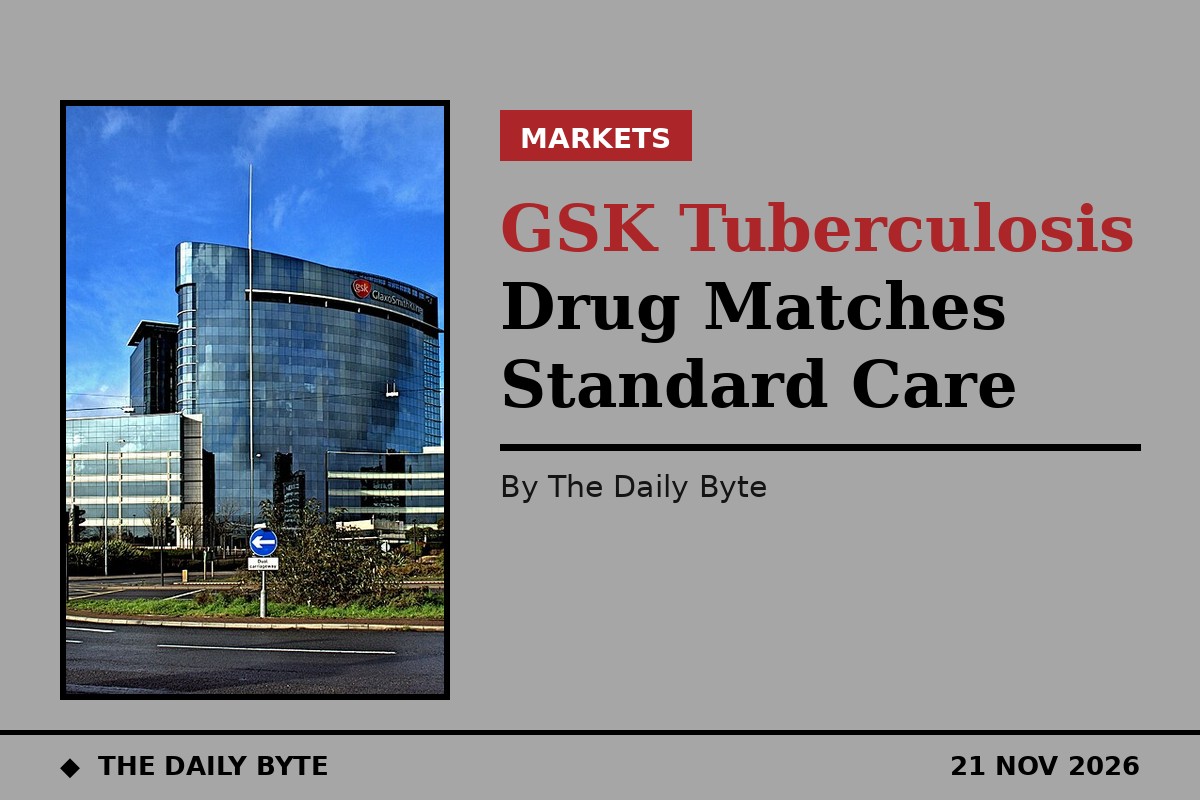
BioVersys reported on 20 November 2026 that its tuberculosis combination AlpE showed early signs of activity in a completed 14-day Phase 2a trial, and GSK shares rose 1.1 percent on Friday after the results were published. AlpE combines alpibectir with the anti-tuberculosis drug ethionamide, and it is being developed through a collaboration between GSK and BioVersys for pulmonary tuberculosis and tuberculosis meningitis.
The Phase 2a ENABLE study, registered as NCT06748937, tested a 45 mg dose of alpibectir, higher than previously studied, combined with either 125 mg or 250 mg of ethionamide. The combination was given alone and together with rifampicin, pyrazinamide and ethambutol, a regimen known as RZE, replacing isoniazid in the standard-of-care HRZE regimen. The study was conducted by TASK as part of the European Union Innovative Health Initiative project UNITE4TB, and the results were presented at the Union World Conference on Lung Health in Rio de Janeiro, held from 17 to 20 November.
Higher dose matched standard care
Every regimen tested displayed early bactericidal activity, which measures how quickly a treatment kills tuberculosis bacteria in sputum samples over the first days of therapy. The activity was dependent on the ethionamide dose: the regimen containing 250 mg of ethionamide was more active than the one containing 125 mg. The AlpE 45 mg and 250 mg combination with RZE produced early bactericidal activity that was numerically similar to standard-of-care HRZE over the 14 days.
BioVersys was careful about the limits of that comparison. The study was not designed for formal statistical comparisons between treatment arms, so the numerical similarity to HRZE is an early activity signal rather than proof that the two regimens are equivalent. AlpE was generally well tolerated and showed an acceptable safety profile over the 14-day treatment period, according to the company.
Why the result matters
The finding matters because AlpE could potentially replace isoniazid in the treatment of isoniazid-resistant tuberculosis, a growing problem in which the standard drug no longer works. Alpibectir is designed to boost the activity of ethionamide and to help overcome ethionamide resistance, which could allow lower effective doses and fewer dose-related side effects. Dr David Barros-Aguirre, head of global health medicines research and development at GSK and project lead for UNITE4TB, said the early findings add to the growing clinical data for AlpE and support its continued evaluation as part of potential future regimens that could be simpler and more effective than those available today.
What comes next
The programme now moves to longer testing. A separate Phase 2b trial, known as STEP2C, is evaluating AlpE with RZE during the first two months of treatment in six African countries. That trial will provide the longer-duration evidence needed to judge whether the early activity seen over 14 days translates into a workable treatment regimen. The ENABLE study, with an estimated 60 participants, was not designed to establish cure rates or relapse outcomes, so investors and clinicians will wait for the STEP2C results before drawing firmer conclusions.
For GSK, the result offered a rare bright spot on a difficult day for European markets, with the shares rising 1.1 percent while the wider market fell. The company has built its tuberculosis work around global health partnerships, and AlpE originated from a collaboration involving the Pasteur Institute Lille, BioVersys and GSK. This article reports market and clinical-trial news only and is not investment or medical advice.