Pakistan EV Auto Policy Targets Exports and Cheaper Cars
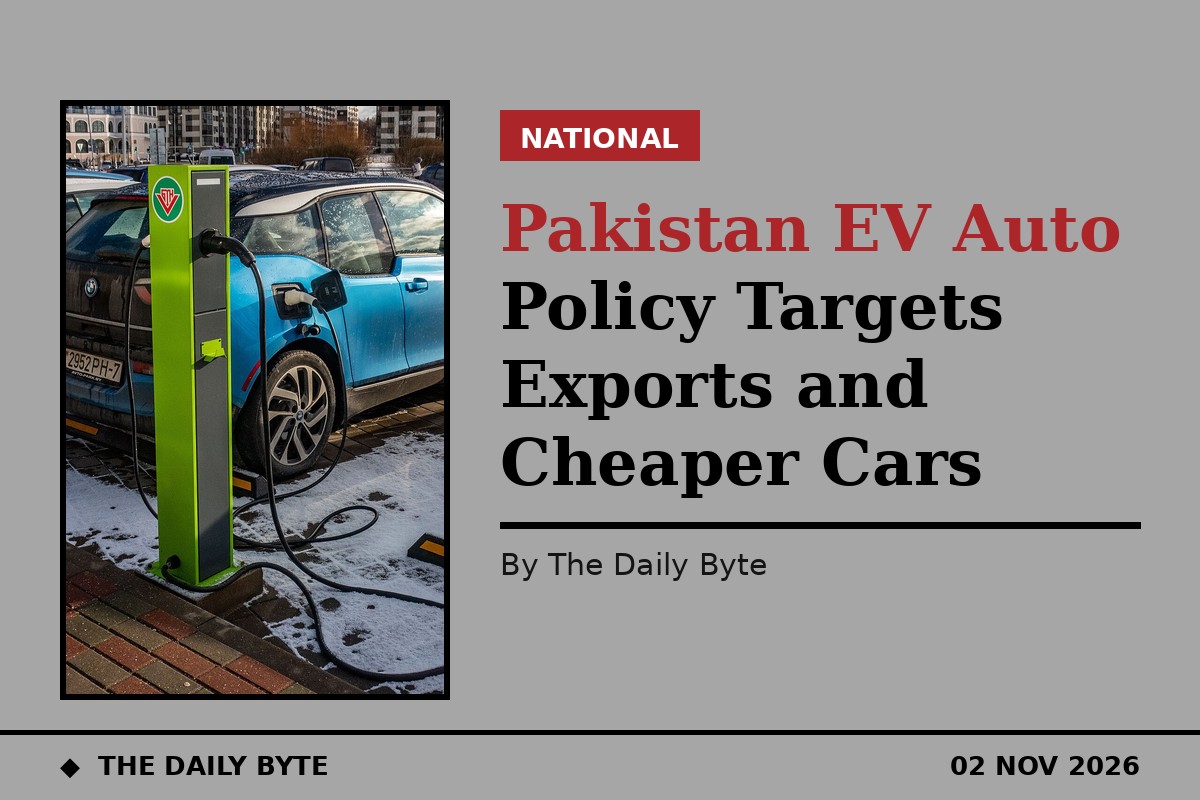
Pakistan is stepping up its push towards electric vehicles, combining a new draft auto policy with its first large roll-on/roll-off shipment of electric cars. The vessel M.V. Grande Shanghai docked at Karachi Port in late October carrying more than 2,000 electric vehicles, a milestone for the country's clean-transport plans. The policy behind the push is the draft Automotive Industry Development and Export Policy 2026-31. Prime Minister Shehbaz Sharif gave it in-principle approval on 20 October, but it is not yet law: it still needs cabinet endorsement, clearance on its tax rates and enabling legislation before any of its rates take effect at showrooms.
What the draft proposes
Under the draft, battery electric vehicles would pay 1% sales tax, range-extended electric vehicles 6% and plug-in hybrids 9%, compared with 18% for hybrids and conventional petrol cars. The government has rejected a suggestion to raise the electric-vehicle sales tax to 18%. The draft also proposes raising the maximum financing limit for electric vehicles from Rs 3 million to Rs 10 million, and extending loan terms from three years to five years. Tariffs on smaller electric vehicles priced below $15,000 would be lower, and the overall tariff level would fall gradually to 15% by 2030-31.
Why the timing matters
The policy sets ambitious export targets: $6 billion in vehicle exports and $1.2 billion in auto-parts exports by 2030-31. Officials link the push to rising fuel costs — petrol prices have risen about 54% and diesel about 43% since the Middle East conflict earlier this year, according to reporting on the policy. Adviser Haroon Akhtar Khan has said that surge is shortening the payback period for electric vehicles to between one and one-and-a-half years. Electric motorcycle and scooter sales have roughly tripled year-on-year, while electric car sales have doubled, and around 20 new electric, hybrid or range-extended models are expected in the second half of 2026. Until the draft becomes law, however, those tax rates remain proposals, not prices buyers can yet rely on. Sources: EV Inside, The News and The Standard.