Star Bulk Q3 Profit Hits 142m as Freight Rates Jump
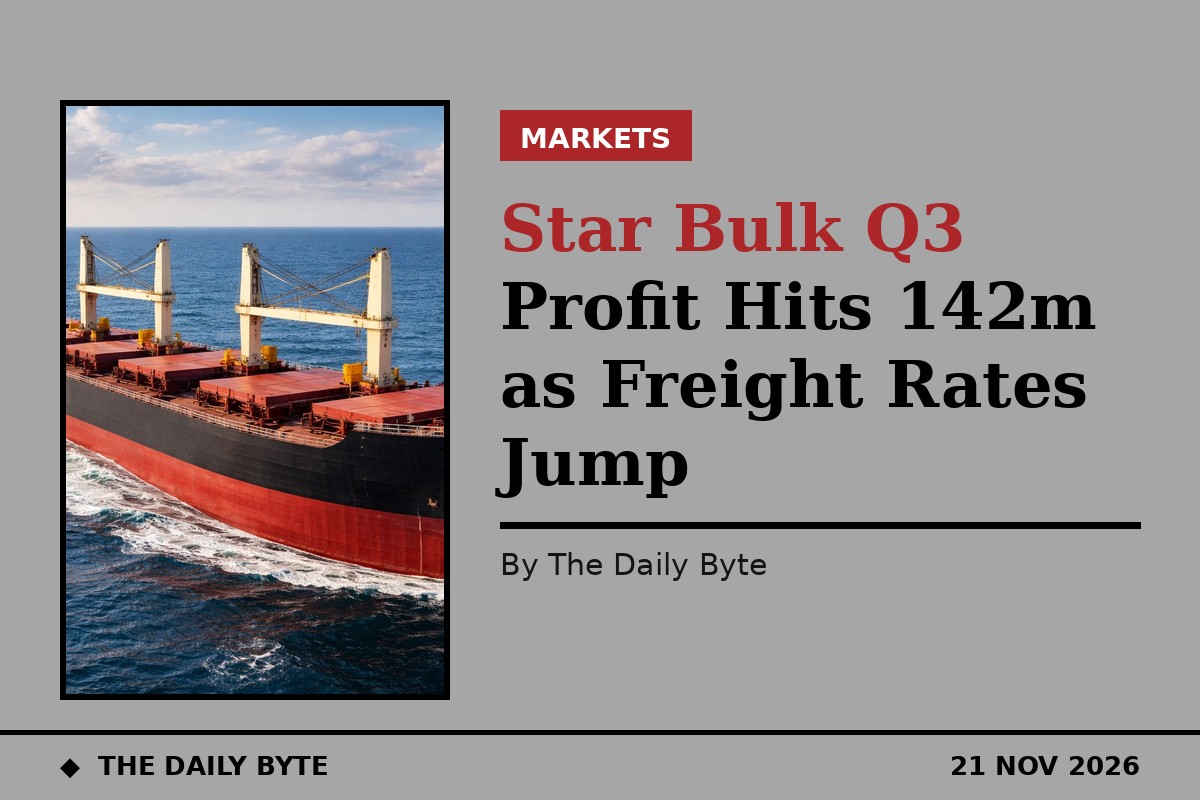
Star Bulk Carriers reported third-quarter net income of 142 million dollars as time-charter equivalent rates rose 48 percent on a year earlier, underlining how strong freight markets lifted the dry bulk shipper's earnings.
The company also declared a dividend of 1 dollar per share, completed its eight-vessel newbuilding programme and reported net debt of 275 million dollars as of 18 November, according to its third-quarter update.
Investors were less impressed by the bottom line against expectations. Star Bulk reported quarterly earnings of 1.28 dollars per share, missing the Zacks consensus estimate of 1.33 dollars per share, and shares in the company fell 3.6 percent after the results.
Freight rates drive the result
Time-charter equivalent rates, the industry's standard measure of daily earnings per vessel after voyage costs, rose 48 percent year on year. That jump was the main engine of the quarter, more than offsetting a smaller average fleet.
Dry bulk shipping carries unpackaged cargoes such as iron ore, coal and grain, and earnings in the sector swing sharply with charter rates. When rates rise as they did in the third quarter, owners with vessels on the water see profits climb quickly. When rates fall, the reverse is just as fast.
Star Bulk's result fits that pattern. Net income reached 142 million dollars on the back of the rate recovery, even as the company operated fewer ships on average than a year earlier.
Dividend and a smaller debt load
The 1 dollar per share dividend signals that management is willing to return cash to shareholders while the market is strong. The company also reported net debt of 275 million dollars, a modest figure for a listed dry bulk owner, after completing its eight-vessel newbuilding programme.
Finishing the newbuilding programme matters because it removes a source of capital spending. With the new vessels delivered, the fleet is in place and the company's cash can be directed towards dividends, debt reduction or further fleet renewal rather than construction payments.
The share price reaction, however, shows that the market is judging Star Bulk on more than the headline profit. Missing the consensus earnings estimate by five cents a share was enough to send the stock lower, even with a 48 percent rise in charter rates and a 1 dollar dividend on the table.
That tension captures the quarter: a strong freight market delivered a large profit, but investors had priced in a little more. Whether the fourth quarter can close that gap will depend on whether charter rates hold at their current levels into the winter season.